Gen Z Meaning in Text can be confusing if you’ve seen it in a message, TikTok comment, or Snapchat chat and aren’t sure what it actually means. Is it simply talking about a generation, or does it have a different text meaning in online chat? Many people ask whether it’s casual, friendly, or important to understand before replying.
The phrase appears often in social media slang, TikTok slang, Instagram captions, and Snapchat meaning discussions because younger users frequently reference Gen Z culture, humor, trends, and expressions. Knowing this popular internet slang helps you understand conversations and avoid confusion when reading posts or messages.
In this guide, you’ll discover what does it mean, real-life examples, common uses, the texting abbreviation context, how to reply when someone mentions it, and when it’s best to ignore the term. Keep reading to learn everything you need to know in a simple, beginner-friendly way.
✦ ───────────────── ✦
Origin and Background of Gen Z
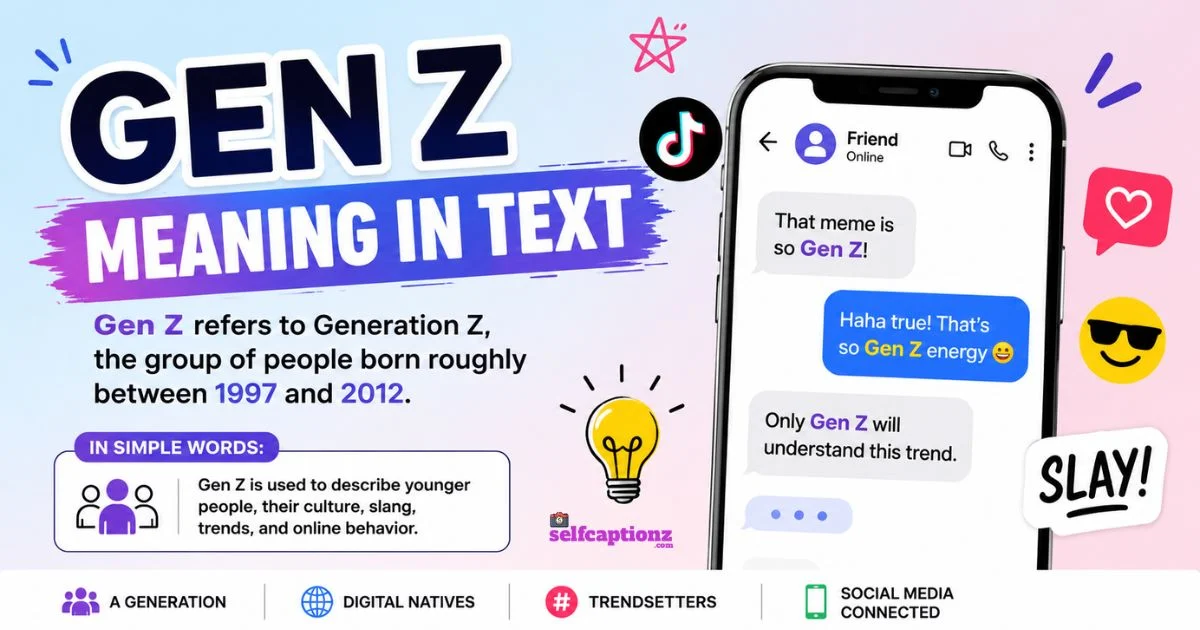
Gen Z refers to the generation born after Millennials and before Generation Alpha. While the exact birth years vary slightly, most researchers place Gen Z between 1997 and 2012. This generation grew up with smartphones, social media, and fast internet, which shaped the way they communicate.
The name “Generation Z” simply follows the alphabetical order after Generation X and Generation Y (Millennials). Unlike earlier generations, Gen Z experienced digital technology from an early age, making online communication a normal part of everyday life.
As social media platforms became more popular, the term Gen Z also started appearing in text messages, memes, online discussions, and everyday conversations. Today, it often describes not only an age group but also a unique style of humor, slang, trends, and internet culture.
✦ ───────────────── ✦
What Does Gen Z Mean in Text
In text, Gen Z usually refers to someone from Generation Z or describes behaviors, slang, humor, or trends commonly linked with that generation.
People often use the phrase when talking about modern internet habits, viral memes, or the way younger people communicate online. Depending on the conversation, it can be neutral, playful, complimentary, or mildly teasing.
Here are a few examples:
- “That’s such a Gen Z response.”
- “My little brother is totally Gen Z.”
- “I don’t understand all these Gen Z words.”
Sometimes the phrase doesn’t literally refer to someone’s age. Instead, it points to a communication style, such as using internet slang, emojis, abbreviations, or short-form humor.
Understanding the context helps you know whether someone is simply describing a generation or joking about modern online behavior.
✦ ───────────────── ✦
Gen Z Full Form and Definition
Gen Z is the short form of Generation Z.
It is a demographic label used by researchers, marketers, educators, and the general public to identify people born after Millennials. In texting and social media, the shortened form Gen Z is much more common than writing the full phrase.
Simple definition:
Gen Z means Generation Z, the group of people generally born between 1997 and 2012 who are known for growing up in the digital age.
Because this generation spends a significant amount of time online, the term is often associated with:
- Internet culture
- Social media trends
- Viral memes
- Modern slang
- Digital communication
- Short-form videos
- Online communities
Although stereotypes exist, not every person in Gen Z behaves the same way. The term simply identifies a generation rather than defining someone’s personality.
✦ ───────────────── ✦
Who Is Considered Gen Z?
Most experts consider people born between 1997 and 2012 to be part of Generation Z. However, some organizations may use slightly different starting or ending years.
People in this generation grew up during a time when smartphones, streaming services, and social media became everyday tools. Because of this, they often learned digital communication naturally from a young age.
Common characteristics associated with Gen Z include:
- Comfortable using technology
- Active on social media
- Familiar with internet slang
- Quick to adapt to new apps
- Interested in online communities and digital content
These traits describe general trends rather than strict rules. Every individual has different interests, experiences, and communication styles.
✦ ───────────────── ✦
Gen Z in Texting vs Real-Life Conversations
The meaning of Gen Z stays the same in both texting and face-to-face conversations, but the way people use it often changes.
In texting, the term frequently appears in memes, jokes, group chats, and social media comments. Someone might say, “That’s very Gen Z,” after seeing a trendy slang word or a funny TikTok-style joke.
In real-life conversations, people usually use Gen Z when discussing age groups, workplace trends, education, shopping habits, or cultural differences. The tone is often more descriptive than humorous.
For example:
- Text: “Your reply was so Gen Z.”
- Conversation: “Many Gen Z employees prefer flexible work options.”
Knowing the setting makes it easier to understand whether the phrase is being used seriously or playfully.
✦ ───────────────── ✦
How to Respond When Someone Says “Gen Z”
Your reply depends on how the person meant it. Most of the time, calling someone Gen Z is simply an observation or a lighthearted joke.
If the comment is friendly, you can keep the conversation relaxed:
- “I guess I am.”
- “Maybe a little.”
- “That’s fair.”
- “I’ll take that.”
If someone uses the term to tease you, you can respond politely without becoming defensive:
- “Everyone has their own style.”
- “Nothing wrong with keeping up with trends.”
- “That’s just how I communicate.”
When you’re unsure of their meaning, asking, “What do you mean by that?” can help avoid misunderstandings.
Read More: OAT Mean in Text: Definition, Uses & Examples
✦ ───────────────── ✦
Best Replies When Someone Calls You Gen Z
If someone calls you Gen Z, you can answer with confidence, humor, or curiosity depending on the situation.
Here are some fun responses:
- “I’ll consider that a compliment.”
- “Technology raised me.”
- “At least I know the latest trends.”
- “Better than being out of touch.”
- “I learned from the internet.”
- “That’s one way to describe me.”
- “What’s wrong with Gen Z?”
- “We’re just built differently.”
- “I’ll own it.”
- “Fair enough.”
Choose a response that matches the mood of the conversation. Friendly humor usually works best when the comment isn’t meant to offend.
✦ ───────────────── ✦
Gen Z Language and Popular Expressions
Gen Z has introduced many words and phrases that became popular through social media, gaming, and online communities. These expressions often spread quickly across platforms before becoming part of everyday conversations.
Some well-known Gen Z expressions include:
| Expression | Meaning |
| Slay | You did something very well. |
| Bet | Okay, sounds good. |
| No Cap | I’m telling the truth. |
| Sus | Suspicious or questionable. |
| Rizz | Charm or flirting ability. |
| Mid | Average or unimpressive. |
| Delulu | Delusional in a humorous way. |
| It’s Giving | It reminds people of something. |
| Ate | Did an excellent job. |
| NPC | Someone acting in a predictable way. |
Many of these expressions began online but are now common in daily conversations. Their meanings can change over time, so understanding the context is always important.
✦ ───────────────── ✦
Gen Z vs Millennials: What’s the Difference?
Although both generations grew up with technology, they experienced it differently. Millennials witnessed the rise of the internet, while Gen Z largely grew up with smartphones and social media already established.
| Feature | Gen Z | Millennials |
| Birth Years | About 1997–2012 | About 1981–1996 |
| Technology | Digital natives | Grew up during the internet boom |
| Social Media | Used from a young age | Adopted it later |
| Communication | Short messages, memes, slang | Texts, emails, and social media |
| Favorite Content | Short-form videos | Longer articles and videos |
| Internet Culture | Strongly connected | Adapted over time |
Despite these differences, both generations influence online trends, workplace culture, and digital communication.
✦ ───────────────── ✦
Gen Z vs Gen Alpha
Generation Alpha follows Generation Z and represents the youngest digital generation. Many Gen Alpha children have never known a world without smart devices, streaming platforms, and AI-powered technology.
| Feature | Gen Z | Gen Alpha |
| Birth Years | About 1997–2012 | About 2013 onward |
| Current Stage | Teens and young adults | Children and young teens |
| Technology | Grew up with smartphones | Born into AI and smart devices |
| Social Platforms | TikTok, Instagram, YouTube | YouTube Kids, Roblox and newer platforms |
| Communication | Internet slang and memes | Interactive apps and video-first communication |
| Cultural Identity | Digital-first generation | AI-first generation |
As technology continues to evolve, each generation develops its own communication habits. Understanding these differences helps make conversations across age groups easier and more meaningful.
✦ ───────────────── ✦
Does the Meaning of Gen Z Change by Platform?
The core meaning of Gen Z stays the same across all platforms—it refers to Generation Z, the group of people generally born between 1997 and 2012. However, the way people use the term can vary depending on the platform’s culture, content style, and audience.
TikTok
On TikTok, Gen Z is often used to describe viral trends, internet slang, dances, humor, and popular aesthetics. Users may say something is “so Gen Z” when it reflects current online culture or a trending way of speaking.
Example:
- “That sound is so Gen Z.”
- “Only Gen Z would understand this trend.”
YouTube
On YouTube, the term Gen Z commonly appears in educational videos, reaction content, podcasts, and commentary. Creators use it to discuss lifestyle habits, social media trends, consumer behavior, or generational differences.
Example:
- “Why Gen Z prefers short-form videos.”
- “Gen Z slang explained.”
Twitter (X)
On Twitter (X), Gen Z is often used in trending discussions, memes, opinions, and current events. Posts may praise or criticize Gen Z’s influence on pop culture, politics, or internet humor, depending on the conversation.
Example:
- “Gen Z changed internet humor again.”
- “This is peak Gen Z energy.”
On Instagram, Gen Z usually appears in captions, Reels, Stories, and influencer content. Brands and creators often use the term to connect with younger audiences or highlight popular fashion, beauty, and lifestyle trends.
Example:
- “Gen Z-approved outfit ideas.”
- “These editing tips are perfect for Gen Z creators.”
On Facebook, Gen Z is more commonly used in discussions, news articles, parenting groups, and workplace conversations than in casual slang. Users often talk about the generation’s habits, education, careers, or social changes.
Example:
- “What motivates Gen Z employees?”
- “Understanding Gen Z communication styles.”
Although the context changes from one platform to another, Gen Z always refers to Generation Z. The platform simply influences whether the term is used for humor, education, marketing, trends, or general discussion.
Read More: OTG Mean in Text: Definition, Replies & Real Examples 2026
✦ ───────────────── ✦
Is Gen Z Rude, Offensive, or Neutral?
Gen Z is generally a neutral term. It simply refers to Generation Z, the group of people born roughly between 1997 and 2012. Whether it sounds rude or offensive depends on the speaker’s tone and the context of the conversation.
Rude
Gen Z can come across as rude when it’s used to mock, stereotype, or criticize someone instead of describing their generation.
For example, saying, “You’re so Gen Z—you can’t do anything without your phone,” may sound dismissive or insulting. In these cases, the problem isn’t the term itself but how it’s being used.
Offensive
On its own, Gen Z is not an offensive word. However, it may feel offensive if someone uses it to make unfair assumptions about a person’s intelligence, work ethic, or personality.
Like any generational label, using it respectfully helps avoid misunderstandings. It’s better to discuss behaviors without assuming everyone in the same age group is alike.
Neutral
Most of the time, Gen Z is used in a neutral way. People use it in conversations about technology, social media, education, shopping habits, workplace trends, and internet culture.
Examples include:
- “Gen Z spends a lot of time online.”
- “This trend is popular with Gen Z.”
- “Many brands create products for Gen Z consumers.”
In everyday conversations, the term is simply a way to identify a generation rather than judge someone.
✦ ───────────────── ✦
Where Is Gen Z Commonly Used
The term Gen Z appears across many online platforms and everyday conversations. Although its meaning stays the same, the topics surrounding it often vary depending on where it’s used.
On Reddit, Gen Z frequently appears in discussions about social trends, memes, careers, education, technology, and relationships. Users often compare different generations or share personal experiences from a Gen Z perspective.
Online Chats
In casual online chats, people use Gen Z to describe modern slang, humor, internet habits, or trending topics. Friends may jokingly say someone has “Gen Z humor” or “Gen Z energy” during conversations.
Text Messages
In text messages, Gen Z is commonly used as a quick way to describe a person’s communication style, favorite trends, or online behavior. The phrase is often lighthearted and used between friends.
Example:
- “That’s such a Gen Z reply.”
- “You sound very Gen Z today.”
Discord
On Discord, Gen Z often appears in community chats about gaming, anime, memes, streaming, and internet culture. Users may reference Gen Z slang or discuss the latest viral trends in real time.
Gaming Communities
Gaming communities use Gen Z when talking about younger players, gaming slang, streaming culture, and popular online personalities. The term may also describe fast-paced humor, memes, or communication styles commonly seen in multiplayer games.
Across all these platforms, Gen Z consistently means Generation Z. The only thing that changes is the type of conversation in which the term is used.
✦ ───────────────── ✦
Real-Life Examples of Usage
The term Gen Z appears in many everyday situations, from casual chats to workplace discussions. Its meaning depends on the conversation, but it usually refers to the generation or the communication style associated with younger people.
Here are some common examples:
- Friend: “That meme is so Gen Z.”
- Social Media: “Gen Z started another viral trend.”
- Workplace: “Our marketing campaign targets Gen Z consumers.”
- School: “Many Gen Z students prefer digital learning tools.”
- Family: “My younger cousin is definitely Gen Z.”
These examples show that Gen Z is often used to describe age groups, internet culture, or modern habits rather than to insult someone.
Read More: HYY Meaning in Text: Definition, Origin, and Usage 2026
✦ ───────────────── ✦
Comparison With Similar Slang
Although Gen Z is a generational label, people often confuse it with internet slang or phrases that describe online culture. The table below highlights the differences.
| Term | Meaning | Refers to a Generation? | Common Usage |
| Gen Z | Generation born around 1997–2012 | Yes | Describing age group or culture |
| Zoomer | Informal nickname for Gen Z | Yes | Memes and casual conversations |
| Millennial | Generation before Gen Z | Yes | Generational comparisons |
| Gen Alpha | Generation after Gen Z | Yes | Discussions about younger children |
| Boomer | Older generation, often used jokingly | Yes | Internet jokes and age discussions |
| NPC | Someone acting predictably | No | Gaming and meme culture |
| No Cap | I’m telling the truth | No | Casual texting and social media |
Knowing the difference helps you understand whether someone is referring to an age group or simply using internet slang.
✦ ───────────────── ✦
When to Avoid Using Gen Z
While Gen Z is usually a neutral term, there are situations where using it may create confusion or sound disrespectful.
Avoid using Gen Z when:
- You’re making unfair stereotypes about an individual.
- You assume everyone’s behavior matches their generation.
- The conversation requires professional or formal language.
- You’re using it to criticize or mock someone’s age.
- The person’s generation isn’t relevant to the discussion.
Instead of labeling someone, focus on the specific behavior or situation. This makes conversations more respectful and accurate.
✦ ───────────────── ✦
Polite Alternatives
If you want to avoid using Gen Z, there are several respectful alternatives depending on the context.
Some polite options include:
- Younger generation
- Young adults
- Digital generation
- Today’s youth
- Younger consumers
- Younger audience
- Young people
- New generation
Choose the phrase that best matches your conversation. In formal writing or business settings, these alternatives often sound more professional.
✦ ───────────────── ✦
Why People Use This Slang
People use Gen Z because it’s a quick and widely recognized way to refer to a specific generation and its cultural trends. The term makes conversations about technology, social media, fashion, humor, and communication easier to understand.
It has also become popular because online platforms spread new trends rapidly. Instead of giving a long explanation, someone can simply say “That’s so Gen Z” to describe a modern style, meme, or way of speaking.
In many cases, the phrase is used humorously or casually rather than as a serious label. As long as it’s used respectfully, it helps people discuss generational differences without lengthy descriptions.
✦ ───────────────── ✦
Impact of Using Slang in Communication
Slang like Gen Z can make conversations more engaging, but it should be used with the right audience and context.
| Situation | Positive Impact | Possible Drawback |
| Text Messages | Makes chats casual and relatable | May confuse older readers |
| Social Media | Fits trends and internet culture | Can become outdated quickly |
| Friends & Family | Creates a relaxed tone | Some jokes may be misunderstood |
| Workplace | Useful in discussions about demographics | May sound too informal in formal communication |
| Marketing | Helps target specific audiences | Risk of stereotyping an entire generation |
| Education | Useful for explaining generational topics | Should be supported with accurate information |
Using slang thoughtfully improves communication. Understanding your audience helps you decide when Gen Z is appropriate and when a more formal alternative is the better choice.
✦ ───────────────── ✦
Is It Safe for Social Media?
Yes, Gen Z is completely safe to use on social media. It is a neutral generational term that appears on platforms like TikTok, Instagram, YouTube, Facebook, X (formerly Twitter), and Reddit.
People commonly use Gen Z when discussing trends, memes, fashion, technology, music, and internet culture. As long as you avoid using the term to stereotype or insult others, it is appropriate for both personal and public posts.
If you’re creating content, use the term accurately and respectfully. This helps your message reach the right audience while keeping the conversation positive.
✦ ───────────────── ✦
How Gen Z Became Popular Online 2026
By 2026, the term Gen Z has become one of the most recognized generational labels on the internet. Its popularity grew alongside short-form videos, social media influencers, viral memes, and online communities.
Several factors helped the term gain widespread attention:
- The rise of TikTok and short-form video content.
- Popular internet slang created and shared by younger users.
- Brands targeting Gen Z consumers through digital marketing.
- Discussions about workplace trends and education.
- Viral memes and online challenges.
- AI-powered content and creator communities.
Today, Gen Z represents more than an age group. It has become closely connected with modern digital culture, fast-changing trends, and online communication.
✦ ───────────────── ✦
Frequently Confused Terms With Gen Z
Many people confuse Gen Z with other generational names or internet slang. Understanding the differences makes conversations much clearer.
| Term | Meaning |
| Gen Z | Generation generally born between 1997 and 2012 |
| Zoomer | Informal nickname for Gen Z |
| Millennial | Generation before Gen Z |
| Gen Alpha | Generation after Gen Z |
| Boomer | Older generation, often used in memes |
| Internet Slang | Informal words or abbreviations used online |
| Digital Native | Someone who grew up using digital technology |
Remember, Gen Z identifies a generation, while many other terms describe communication styles or online behavior.
Read More: BB Meaning in Text: Uses, Examples, and More Guide 2026
✦ ───────────────── ✦
Mistakes to Avoid When Using the Term Gen Z
Although Gen Z is easy to use, a few common mistakes can lead to confusion.
Avoid these mistakes:
- Assuming every young person belongs to Gen Z.
- Using the term as an insult or stereotype.
- Confusing Gen Z with Gen Alpha or Millennials.
- Believing every internet trend comes from Gen Z.
- Using the term without understanding the conversation.
- Treating all Gen Z individuals as having the same opinions or interests.
Using the term accurately makes your communication more respectful and informative.
✦ ───────────────── ✦
Benefits of Understanding Gen Z Slang
Learning Gen Z slang helps you communicate more naturally with younger audiences and better understand online conversations.
Some key benefits include:
- Understanding social media posts and memes.
- Following internet trends more easily.
- Communicating with younger friends, coworkers, or family members.
- Creating relatable online content.
- Avoiding misunderstandings in digital conversations.
- Keeping up with changing online language.
You don’t need to use every slang word yourself, but knowing what they mean makes modern communication much easier.
✦ ───────────────── ✦
Tips for Understanding Modern Internet Slang
Internet language changes quickly, but staying informed doesn’t have to be difficult.
Here are a few practical tips:
- Learn new terms from reliable sources instead of guessing.
- Pay attention to how words are used in context.
- Remember that slang meanings can change over time.
- Ask for clarification if you don’t understand a term.
- Avoid overusing slang in professional settings.
- Stay open to new trends without assuming everyone uses them.
The more online content you read and watch, the easier it becomes to recognize modern internet expressions and understand how they’re used.
✦ ───────────────── ✦
FAQs
1. Does Gen Z always refer to a person’s age?
Not always. While Gen Z identifies a generation, people also use the term to describe modern internet culture, humor, or communication styles.
2. Is Gen Z a slang word?
No. Gen Z is a generational label, although it often appears alongside internet slang and social media trends.
3. Can older people use the term Gen Z?
Yes. Anyone can use the term when referring to Generation Z or discussing topics related to that generation.
4. Is Gen Z appropriate in professional conversations?
Yes, when discussing demographics, marketing, education, or workplace trends. Avoid using it to stereotype individuals.
5. Why do people say “That’s so Gen Z”?
They usually mean something reflects Gen Z’s humor, fashion, language, or online culture rather than simply referring to someone’s age.
6. Is Zoomer the same as Gen Z?
Almost. Zoomer is an informal nickname for Gen Z and is commonly used in memes and casual online conversations.
7. Does Gen Z have the same meaning worldwide?
The meaning is generally the same around the world, although cultural trends and slang associated with Gen Z may differ from country to country.
8. Can Gen Z be used in marketing?
Yes. Businesses frequently use the term to describe products, services, or campaigns aimed at younger consumers.
9. Why is Gen Z discussed so often online?
Gen Z has a major influence on social media trends, digital communication, entertainment, fashion, and consumer behavior, making it a frequent topic of discussion.
10. Will the meaning of Gen Z change in the future?
The definition of Gen Z will likely remain the same, but the trends, slang, and cultural references associated with the generation will continue to evolve.
Conclusion
Gen Z simply means Generation Z, the group of people generally born between 1997 and 2012. In texting, social media, and everyday conversations, the term often describes not only a generation but also the digital culture, humor, and communication style commonly associated with it. While its usage may vary by platform or context, its core meaning remains consistent.
Understanding what Gen Z means can help you navigate online conversations, interpret modern slang, and communicate more effectively across different age groups. Whether you’re reading social media posts, chatting with friends, or creating content, knowing the context behind the term helps prevent misunderstandings.
As internet language continues to evolve, Gen Z will remain an important part of discussions about technology, culture, and communication. Keeping up with these changes makes it easier to understand new trends while using generational terms in a respectful and accurate way.
✦ End of Section ✦

Hi, I am Leuron Leonard, the author of “selfcaptionz.com”, a platform dedicated to creative captions, meaningful quotes, and engaging text ideas for social media.
Read Next