JS Meaning in Text can be confusing when it suddenly appears in a message or comment. Have you seen someone type “JS” in an online chat or on social media and wondered what it means? You’re not alone. This popular texting abbreviation shows up across conversations, leaving many people unsure how to interpret it.
You’ll often spot JS in Snapchat, TikTok slang, Instagram, X, and other messaging apps because people prefer short, quick expressions. Depending on the conversation, its text meaning can change, making it important to understand the context before you reply. Knowing common internet slang helps you avoid misunderstandings and communicate with confidence.
This guide explains the JS meaning in text, its different uses, real-life examples, how to reply, when it’s appropriate to use, and when it’s better to ignore it. Keep reading to discover exactly what JS means and how to use it like a pro.
Origin and Background of JS
JS has become a common abbreviation in digital conversations because people often shorten phrases to communicate faster. With the rise of social media slang, messaging apps, and quick online chats, short forms like JS became popular among users who want to express ideas with fewer words.
The use of JS in texting mainly grew from casual internet communication where speed and simplicity matter. People on platforms like Snapchat, Instagram, TikTok, and other messaging apps use abbreviations to keep conversations short and informal.
While JS can have different meanings depending on the situation, the most common use in everyday texting is “Just Saying.” It usually adds a casual tone, showing that someone is sharing an opinion or comment without trying to sound too serious or aggressive.
Understanding the background of this texting abbreviation helps you read conversations more clearly and avoid confusion when you see it in messages.
What Does JS Mean in Text?
JS meaning in text is most commonly “Just Saying.” People use it after sharing a thought, opinion, or statement to make their message sound more casual. It can suggest that they are simply expressing their view and not necessarily trying to argue or criticize.
For example:
- “That movie was not as good as the first one, JS.”
- “You should probably check the details before buying it, JS.”
In both examples, JS softens the message. It tells the reader, “I’m only sharing my opinion,” which can make the conversation feel less direct or harsh.
The meaning of JS in online chat depends on the surrounding words. In some cases, it may represent other phrases, names, or technical terms, but in normal texting and social media conversations, Just Saying is the meaning most users expect.
JS = Just Saying
JS = Just Saying is a casual phrase used when someone wants to add a personal opinion, observation, or suggestion. It works like a small disclaimer that shows the person is not forcing their idea on others.
People often use it in friendly conversations, debates, or comments where they want to be honest while keeping a relaxed tone.
Examples:
- “Your new profile picture looks great, JS.”
- “I think the old version was better, JS.”
- “You might want to save your work, JS.”
The phrase does not usually sound rude, but the tone depends on the message. If someone uses JS after a negative comment, it may still feel like criticism, even though they are trying to make it sound softer.
JS Full Form and Different Meanings
The full form of JS depends on the context, but in texting and social media, it usually means “Just Saying.” Since online language changes quickly, the same abbreviation can represent different phrases in other fields or communities.
Common meanings of JS include:
- Just Saying – used in casual texting and online conversations.
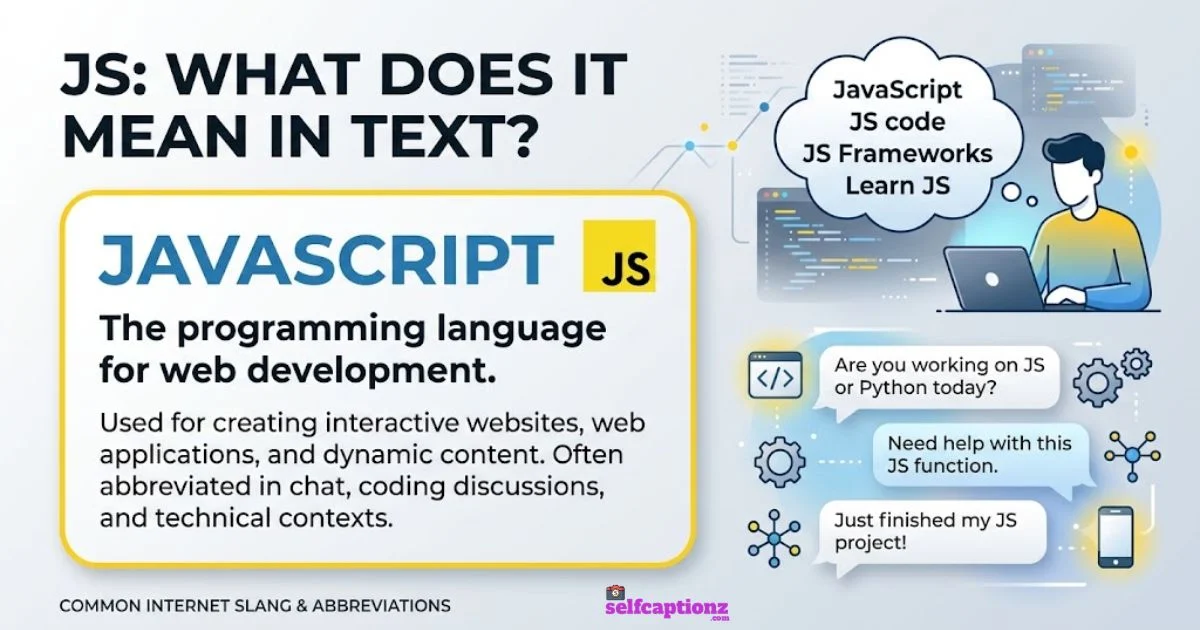
- JavaScript – a popular programming language used in websites and software development.
- Job Satisfaction – sometimes used in workplace discussions or surveys.
- Joint Statement – used in formal communication or documents.
The meaning becomes clear by looking at the topic of the conversation. For example, a developer discussing website coding may use JS to mean JavaScript, while a friend sending a message may use it to mean Just Saying.
When you see JS in a text message, check the words around it before deciding what it means. Context is the easiest way to understand most internet slang and abbreviations.
Read More: XD Meaning in Text: Definition, Uses & Examples 2026
JS Meaning Slang in Texting
JS slang in texting usually means “Just Saying” and is used to express an opinion in a relaxed way. It appears often in casual conversations because people use short expressions to save time while chatting.
You may see JS in messages, comments, captions, or replies on platforms like Snapchat, TikTok, Instagram, and other social networks. It is especially common among younger users who frequently use short forms and TikTok slang.
Examples of JS in texting:
- “I think you should talk to her first, JS.”
- “That outfit looks better in black, JS.”
- “You always forget your keys, JS.”
How to Reply to JS
Your reply depends on the message tone. If someone uses JS to share a friendly opinion, you can respond casually:
- “I get what you mean.”
- “Fair point!”
- “Thanks for the suggestion.”
If the comment feels negative, you can ask for clarification:
- “What makes you say that?”
- “Are you just sharing your opinion?”
In most cases, JS is harmless and friendly, not a rude or offensive phrase. Understanding the context helps you know whether someone is joking, giving advice, or simply sharing their thoughts.
What Does JS Stand For on Social Media?
On social media, JS usually stands for “Just Saying,” especially in casual posts, comments, and direct messages. Users add JS when they want to share an opinion, suggestion, or observation without making it sound like a strong command or serious argument.
The meaning of JS on social media can slightly change depending on the platform and conversation style. Here is how people commonly use it across popular apps:
TikTok
On TikTok, JS means “Just Saying” in captions, comments, and replies. Creators and viewers often use it after sharing a personal thought, reaction, or opinion about a video.
Example:
- “This song is better than the original, JS.”
It helps make the statement feel more casual and conversational, which fits the fast-moving style of TikTok slang.
Snapchat
On Snapchat, JS usually means “Just Saying” when friends are chatting through snaps or messages. Since Snapchat conversations are often quick and informal, abbreviations like JS help users type faster.
Example:
- “You looked happier in your old photos, JS.”
The phrase can sound friendly, but the exact tone depends on the relationship between the people chatting.
YouTube
On YouTube, users may use JS in comments to share opinions about videos, creators, or topics. Viewers often add it when they want to express a viewpoint without starting an argument.
Example:
- “The first episode was more interesting, JS.”
It works as a way to show that the comment is simply a personal opinion.
On Instagram, JS appears in comments, captions, and DMs. People use it when reacting to photos, reels, or stories and want to keep their message casual.
Example:
- “This color suits you better, JS.”
The abbreviation is common among users who prefer short and relaxed communication.
Twitter (X)
On Twitter/X, JS is often used in replies and discussions where users share quick opinions. Because conversations on the platform move quickly, short expressions help users communicate faster.
Example:
- “That update needs more improvements, JS.”
However, users should consider the context because short comments can sometimes sound more serious than intended.
JS Meaning in Technology
In technology, JS most commonly stands for JavaScript, a popular programming language used to create interactive websites and applications. Unlike the texting meaning of JS (“Just Saying”), the technology meaning appears in coding, software development, and web design discussions.
Developers use JavaScript (JS) to add features such as animations, buttons, forms, and dynamic content to websites. It works alongside other web technologies like HTML and CSS to create modern online experiences.
Examples of JS in technology:
- “I’m learning JS for web development.”
- “This website uses JS for interactive features.”
- “The developer fixed a JS error.”
Common technology-related uses of JS include:
- Web development
- Mobile app development
- Game development
- Server-side programming
- Software tools and frameworks
If you see JS in a programming conversation, it almost always refers to JavaScript, not internet slang. Checking the topic of the conversation is the easiest way to identify the correct meaning.
Read More: ASH Meaning in Text: Definition, Uses & Examples 2026
Is JS Rude, Offensive, or Neutral?
JS is usually a neutral phrase and is not considered rude or offensive. In most conversations, it simply means “Just Saying” and shows that someone is sharing their opinion or thought.
However, the tone can change depending on the words before or after JS. A friendly comment may sound supportive, while a negative statement with JS may feel slightly critical.
Friendly Use
In friendly conversations, JS sounds casual and harmless. People use it to share advice, compliments, or simple observations without creating pressure.
Examples:
- “You should try that restaurant, JS.”
- “Your new hairstyle looks great, JS.”
Here, JS makes the message feel relaxed and personal.
Slightly Sarcastic Use
Sometimes, people use JS with sarcasm when they want to point something out in a joking or teasing way. The meaning depends heavily on the relationship between the people involved.
Example:
- “You finally arrived on time, JS.”
This could be a playful joke between friends rather than a serious complaint.
Passive-Aggressive Use
In some situations, JS can feel passive-aggressive when someone uses it after a negative comment. The phrase may soften the words, but the message can still sound like criticism.
Example:
- “Maybe you should read the instructions first, JS.”
The person may be trying to avoid sounding harsh, but the comment can still feel judgmental.
Overall, JS is usually safe and neutral in texting. To understand the real meaning, focus on the context, relationship, and tone of the conversation rather than the abbreviation alone.
Why People Use JS in Text Messages
People use JS in text messages because it helps them share opinions quickly while keeping the conversation casual. The abbreviation “Just Saying” allows users to add a thought, suggestion, or reaction without making it sound too serious or forceful.
In fast online conversations, people prefer short forms that save time and feel natural. Using JS in texting makes messages shorter while still showing the writer’s intention. It often works like a small phrase that means, “This is only my opinion.”
Common reasons people use JS include:
- Sharing personal thoughts without sounding demanding
- Giving advice in a softer way
- Adding humor or sarcasm in friendly chats
- Avoiding misunderstandings during discussions
For example, someone may write, “You should watch that movie, JS,” instead of giving a long explanation. The abbreviation keeps the message simple and conversational.
JS Meaning in WhatsApp Chats
In WhatsApp chats, JS usually means “Just Saying.” People use it when they want to share an opinion, suggestion, or personal thought without making the message sound too serious. It is common in casual conversations between friends, family members, and online contacts.
Examples of JS in WhatsApp messages:
- “You should get some rest, JS.”
- “I think the first option is better, JS.”
- “That movie was not that great, JS.”
The meaning of JS in WhatsApp depends on the conversation. A friendly message may use it to give advice, while a serious discussion may use it to soften a criticism.
Because WhatsApp chats are usually quick and informal, abbreviations like JS help people communicate faster while keeping messages short.
JS vs Just Saying: Understanding the Difference
JS and “Just Saying” have the same meaning, but JS is simply the shortened version used in online conversations. The full phrase sounds clearer, while the abbreviation feels faster and more casual.
Examples:
- Full phrase: “I think you should check the details, just saying.”
- Short form: “I think you should check the details, JS.”
Both expressions share the same purpose: they show that someone is adding a thought or opinion. The main difference is the style of communication.
“Just Saying” works better in formal or clear conversations because everyone understands it. JS fits better in texting, social media, and casual online chats where short forms are common.
Common Mistakes People Make When Using JS
The most common mistake with JS is using it without considering the tone of the message. Although JS is usually harmless, adding it after a negative statement can sometimes make the message sound sarcastic or dismissive.
Common mistakes include:
- Using JS in professional emails
- Adding JS after harsh criticism
- Assuming everyone knows the abbreviation
- Using JS without checking the conversation context
For example:
- “Your work needs improvement, JS.”
This may sound more critical than helpful. A clearer message would explain the issue politely instead of hiding behind an abbreviation.
Another mistake is confusing JS (“Just Saying”) with JavaScript. The correct meaning depends on whether the conversation is about texting or technology.
Read More: ALR Meaning in Text: Definition, Uses & Examples 2026
How to Reply When Someone Sends JS
The best way to reply to JS depends on the message tone and your relationship with the sender. Since JS usually means someone is sharing an opinion, your response can be simple and natural.
Short Casual Replies
For friendly conversations, you can reply with:
- “I get what you mean.”
- “Fair enough.”
- “Good point.”
- “Haha, maybe.”
- “I’ll think about it.”
These replies keep the conversation relaxed and positive.
Funny Replies
If the conversation is playful, you can use humorous responses:
- “Just saying? Sounds like you’re saying a lot 😂”
- “Noted, your opinion has been recorded.”
- “JS accepted, but I still disagree 😄”
Funny replies work best when you already have a friendly relationship with the person.
Professional Replies
In work-related conversations, keep your response clear and respectful:
- “Thanks for sharing your thoughts.”
- “I appreciate your feedback.”
- “That’s a useful point to consider.”
Avoid replying with too much slang in professional discussions to keep communication clear.
Does JS Have Different Meanings in Other Languages?
JS does not have one universal meaning across all languages, but its use as “Just Saying” is common in English-based online communication. Since internet slang spreads globally, many non-English speakers also use JS while chatting online.
In different regions, JS may also represent local phrases, names, organizations, or technical terms. The meaning depends on the language, community, and topic of conversation.
For example:
- In international online chats, JS often means Just Saying.
- In developer communities worldwide, JS usually means JavaScript.
Always look at the surrounding conversation to understand the intended meaning.
JS Abbreviation Trends in Modern Internet Culture
JS is part of a larger trend where internet users create shorter ways to communicate. Social media, messaging apps, and online communities have made abbreviations a normal part of digital conversations.
Modern internet culture uses many short forms, such as:
- LOL – Laugh Out Loud
- TBH – To Be Honest
- IMO – In My Opinion
- BRB – Be Right Back
- JS – Just Saying
These abbreviations help users communicate quickly and create a shared online language. Younger generations especially use short forms because they match the fast style of platforms like TikTok, Instagram, Snapchat, and Discord.
However, slang changes over time, so users must understand the context rather than relying only on the abbreviation.
How JS Changes the Tone of a Message
JS can make a message sound softer, more casual, or less direct. It often works as a tone marker that tells the reader the person is simply sharing an idea.
Compare these examples:
Without JS:
- “You chose the wrong option.”
With JS:
- “I think another option might work better, JS.”
The second message feels less forceful because JS suggests that the statement is only an opinion.
However, tone depends on the full sentence. A negative comment followed by JS may still feel critical or sarcastic.
Understanding the emotion behind the message is just as important as understanding the abbreviation itself.
Read More: Gen Z Meaning in Text: Simple Explanation With Examples 2026
Should You Use JS in Formal Writing?
You should usually avoid using JS in formal writing because it is an informal texting abbreviation. Professional emails, reports, academic papers, and official documents require clear and complete language.
Instead of writing:
- “The plan needs changes, JS.”
Use:
- “I believe the plan may need some changes.”
- “In my opinion, this approach could be improved.”
JS works well in:
- Personal messages
- Social media comments
- Casual online conversations
It is better to use complete phrases in formal situations to maintain a professional tone and avoid confusion.
Real-Life Examples of JS Usage
JS appears in everyday conversations when people want to express an opinion, suggestion, or observation. The meaning stays the same, but the feeling behind it can change depending on the situation and relationship between the people chatting.
Examples of JS in text messages:
- “I think you should save some money before buying it, JS.”
- “That restaurant has better food than the other one, JS.”
- “You always choose the funniest movies, JS.”
- “I liked the older design more, JS.”
These examples show how JS meaning in chat depends on the message around it. A positive comment may sound friendly, while a criticism may feel stronger even with JS added.
Friendly Tone
JS can create a friendly tone when someone uses it to share a helpful thought or compliment. In this situation, the abbreviation makes the message feel relaxed and shows that the person is not trying to pressure the other person.
Examples:
- “You look great in that outfit, JS.”
- “You should try the new café near your place, JS.”
- “Your idea was actually really good, JS.”
Here, JS works as a gentle way to add a personal opinion. Friends often use it in casual conversations because it keeps the message warm and natural.
Casual Tone
In casual conversations, JS is often used as a simple way to add a quick opinion or observation. It fits well in everyday texting between friends, family members, or online contacts.
Examples:
- “That game is more fun with friends, JS.”
- “I think the second option is better, JS.”
- “You should check that new series, JS.”
This type of usage is common on messaging apps and social platforms because people want to communicate quickly. The abbreviation feels informal and matches the relaxed style of online chat.
Argumentative Tone
JS can sometimes appear during disagreements or debates when someone wants to express a strong opinion while making it sound less aggressive. Although it usually remains neutral, the sentence before JS can affect how the message feels.
Examples:
- “You should have checked the facts first, JS.”
- “I think your point misses something important, JS.”
In these cases, JS may not completely remove the criticism. The reader may still feel that the person is correcting them or challenging their opinion.
When using JS during a debate, it helps to consider your wording. A respectful message will usually create a better conversation.
Gaming Context
In gaming conversations, JS can have different meanings depending on the community, but casual players may use it as “Just Saying.” Gamers often use short phrases while discussing strategies, updates, characters, or gameplay.
Examples:
- “That weapon needs a balance update, JS.”
- “The old map was more enjoyable, JS.”
However, in technical gaming discussions, JS could also refer to JavaScript if players are talking about game development, coding, or browser-based games.
Always check the conversation topic before deciding what JS means in a gaming chat.
Social Media Context
On social media, JS is commonly used as “Just Saying” in comments, captions, and replies. Users add it when they want to share a reaction, opinion, or personal view without making their statement sound like a strict fact.
Examples:
- “This trend is getting too popular, JS.”
- “The original version was better, JS.”
- “That creator deserves more attention, JS.”
You may see JS on TikTok, Instagram, Snapchat, YouTube, and Twitter/X because social platforms encourage short and quick communication. Understanding these common abbreviations makes it easier to follow conversations and recognize the tone behind online messages.
Read More: BB Meaning in Text: Uses, Examples, and More Guide 2026
What Does JS Mean in Gaming?
In gaming conversations, JS can mean “Just Saying” when players share opinions, suggestions, or reactions. Gamers often use short abbreviations during chats, forums, and community discussions because quick communication helps keep conversations moving.
Examples of JS in gaming chats:
- “That character needs a better update, JS.”
- “The old version of this game was more fun, JS.”
- “You should try a different strategy, JS.”
However, JS does not always have the same meaning in gaming. In game development communities, it often refers to JavaScript, a programming language used for creating browser games, tools, and interactive features.
The easiest way to understand JS meaning in gaming is to check the topic. If players are discussing gameplay, it may mean Just Saying. If they are talking about coding or development, it likely means JavaScript.
Comparison Between JS and Similar Slang Terms
JS is similar to other texting abbreviations that people use to share opinions, reactions, or feelings. However, each slang term has a slightly different purpose and tone.
| Slang Term | Meaning | Common Use |
| JS | Just Saying | Adding a personal opinion or comment |
| IMO | In My Opinion | Clearly showing a personal viewpoint |
| IMHO | In My Humble Opinion | Sharing an opinion politely |
| TBH | To Be Honest | Giving an honest thought or response |
| FYI | For Your Information | Sharing information or facts |
The main difference is that JS often sounds more casual. While “IMO” directly introduces an opinion, “JS” feels more like an extra note added after a statement.
For example:
- “IMO, this movie is better.”
- “This movie is better, JS.”
Both express an opinion, but the second one feels more conversational.
When to Avoid Using JS
You should avoid using JS when the conversation requires clear, professional, or formal communication. Although “Just Saying” is common in casual texting, it may sound too informal in serious situations.
Avoid using JS in:
- Professional emails
- Workplace discussions
- Academic writing
- Formal requests
- Important conversations where tone matters
In some cases, adding JS after criticism can make your message seem less respectful instead of softer.
Avoid Example
Instead of:
- “Your report has many mistakes, JS.”
A better option:
- “I noticed a few areas that may need corrections. Let’s review them together.”
The second message sounds more professional and encourages a positive conversation.
Polite Alternatives to JS
Polite alternatives to JS can help you express your thoughts more clearly and respectfully. Depending on the situation, you can replace JS with phrases that better match the tone of the conversation.
Some useful alternatives include:
- “Just my opinion” – when sharing a personal view
- “I think” – for a simple suggestion
- “In my experience” – when sharing personal knowledge
- “You may want to consider” – for polite advice
- “I could be wrong, but…” – when discussing uncertain ideas
Examples:
Instead of:
- “That option is better, JS.”
You can say:
- “I think that option might work better.”
These alternatives make your message clearer and can reduce the chance of misunderstanding.
Impact of Slang Like JS in Communication
Slang abbreviations like JS have changed the way people communicate online by making conversations faster and more informal. Short forms help users express ideas quickly, especially on platforms where people send many messages every day.
Positive Effects
JS and similar slang terms can make communication easier and more natural. They help people:
- Save time while texting
- Create a casual conversation style
- Show personality and emotion
- Connect with online communities
For younger users, internet slang has become a normal part of digital communication.
Negative Effects
Overusing slang can sometimes create confusion or misunderstandings. Not everyone knows the same abbreviations, especially across different age groups, cultures, or professional environments.
Possible problems include:
- Unclear meanings
- Wrong interpretation of tone
- Less professional communication
- Difficulty for new internet users
Using slang works best when you understand your audience and the situation.
Is JS Safe for Social Media?
Yes, JS is generally safe to use on social media because it is a normal and harmless abbreviation. The phrase “Just Saying” does not contain offensive or harmful meaning by itself.
However, the way you use JS matters. A friendly comment with JS can sound casual, while a negative statement may appear sarcastic or rude.
Before using JS online, consider:
- Who will read your message
- Whether your comment could be misunderstood
- Whether the situation is casual or professional
Using respectful language helps prevent unnecessary conflicts on social platforms.
How to Identify the Correct Meaning of JS
You can identify the correct meaning of JS by looking at the context of the conversation. The same abbreviation can have different meanings depending on where and how someone uses it.
Follow these simple steps:
- Check the topic
- A coding discussion likely means JavaScript.
- A casual chat likely means Just Saying.
- Look at nearby words
- “JS is used to build websites” means JavaScript.
- “That outfit looks better, JS” means Just Saying.
- Consider the platform
- Social media and texting usually use slang meanings.
- Technology forums often use technical meanings.
Context is the best tool for understanding any texting abbreviation.
Frequently Asked Questions
What does JS mean in text messages?
JS usually means “Just Saying” in text messages. People use it after sharing an opinion, thought, or suggestion.
Does JS mean something rude?
No, JS is usually neutral and not rude. However, the tone depends on the sentence and situation.
What does JS mean on Snapchat?
On Snapchat, JS commonly means “Just Saying” when friends share casual thoughts or opinions.
What does JS stand for in technology?
In technology, JS stands for JavaScript, a programming language used for websites, apps, and software.
Is JS the same as IMO?
No. JS means “Just Saying,” while IMO means “In My Opinion.” Both relate to sharing thoughts, but they are used differently.
How should I reply when someone says JS?
Your reply depends on the message. You can agree, ask questions, or simply acknowledge their opinion.
Conclusion
JS meaning in text is most commonly “Just Saying,” a casual abbreviation used to share opinions, thoughts, or suggestions. It appears frequently in texting, social media comments, and online chats because people prefer quick and simple communication.
While JS is usually friendly and neutral, its meaning can change based on context. In technology discussions, it may refer to JavaScript, while in casual conversations it usually means Just Saying.
Understanding the situation, platform, and tone helps you interpret JS correctly. Whether you see it on Snapchat, TikTok, Instagram, gaming chats, or everyday messages, knowing its meaning makes online conversations easier to follow.

Hi, I am Leuron Leonard, the author of “selfcaptionz.com”, a platform dedicated to creative captions, meaningful quotes, and engaging text ideas for social media.
Read Next