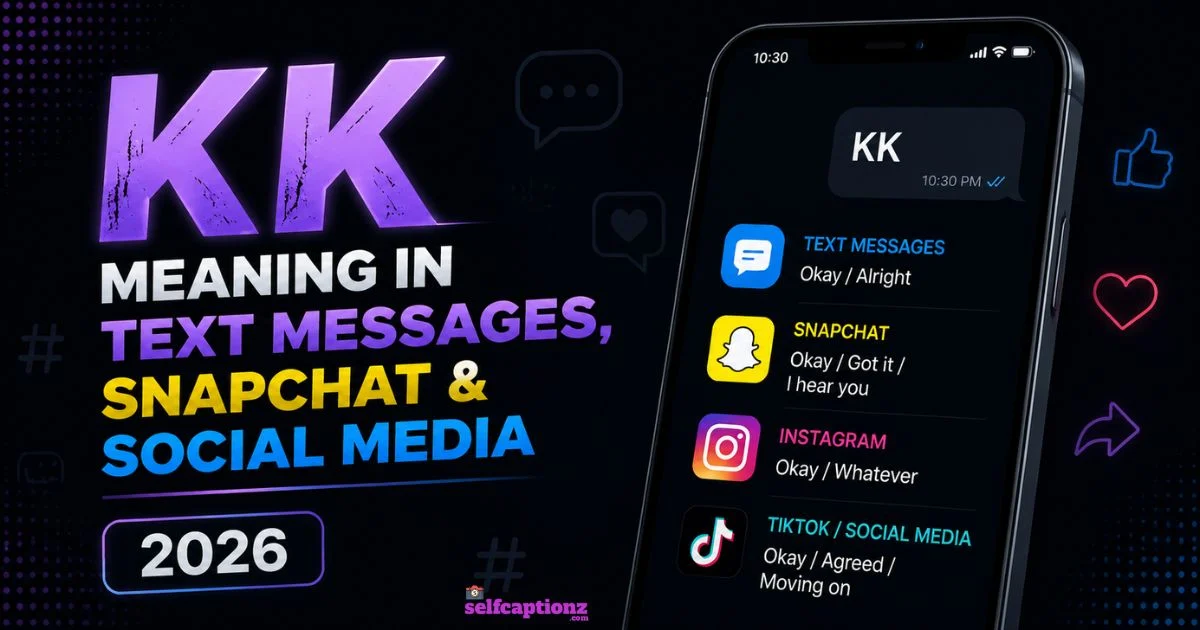
KK in text means “okay” or “alright.” People use it as a quick and casual way to show agreement, confirm something, or let someone know they understood the message. It works like a shorter version of “OK” or “got it” in everyday online conversations.
You may see KK meaning in text on social media, messaging apps, gaming chats, and comment sections. It is usually a friendly and neutral reply, but the tone can change depending on the conversation. For example, “KK, I’ll do it” sounds cooperative, while only sending “KK” may feel brief or less enthusiastic.
Many people search what does KK mean because short replies can sometimes feel confusing. In most cases, KK is not rude or negative. It simply shows acknowledgment and keeps the conversation moving.
Full Form of KK in Chat
The full form of KK in chat is generally “Okay” or “Okay, okay.” It does not usually stand for a longer phrase. Instead, it is a casual texting abbreviation created to make digital communication faster and easier.
The double “K” adds a slightly more relaxed feel compared to a single “K.” While “K” alone can sometimes sound cold or annoyed, “KK” often feels softer and more friendly. Many users choose it when they want to confirm something without typing a complete sentence.
Examples of KK in messages:
- “Can you send me the file today?”
“KK, I’ll send it soon.” - “Meet me at 7 PM.”
“KK, see you then.”
In online chat, KK helps people respond quickly while still showing that they received the information.
Origin and Rise of KK in Online Slang
KK became popular as part of the growth of internet slang and digital communication. As people started using instant messaging, forums, and online games, short responses became common because users wanted faster ways to communicate.
The phrase gained attention through early online chats and gaming communities where quick replies were important. Typing a short confirmation like KK saved time while keeping conversations simple and casual.
Today, KK appears across platforms like Snapchat, TikTok, Instagram, and other messaging apps. Its popularity comes from the way modern conversations favor short, easy-to-type expressions.
Where It Came From
KK likely developed from the common abbreviation “OK,” which people have used for decades to show agreement. Online users began repeating letters and creating shorter forms to make conversations feel quicker and more informal.
The use of repeated letters is common in digital language. Similar patterns appear in words like “hmm,” “haha,” and “bye bye,” where repetition can add a different feeling or tone.
Over time, KK became recognized as a simple online response. It moved from early internet spaces into everyday texting and became a familiar part of modern communication.
Why It Became Popular
KK became popular because it is short, easy to remember, and works in many situations. People use it when they want to reply quickly without stopping the conversation flow.
Social media platforms and mobile messaging helped spread this type of social media slang. Apps like Snapchat and TikTok encourage fast communication, making short phrases and abbreviations more common.
Another reason for its popularity is that KK feels less formal than “okay.” It fits casual conversations between friends, classmates, coworkers, and online communities.
Read More: Ditto Mean in Text: Definition, How to Use It & Examples 2026
How KK Is Used in Real Conversations
KK is used to confirm information, agree with someone, or show that a message was understood. Its meaning stays mostly the same, but the feeling behind it depends on the relationship between the people and the situation.
In friendly conversations, KK often sounds polite and relaxed. For example, a friend may say, “KK, I’ll call you later,” to show they understand the plan.
However, context matters. A short “KK” from someone who usually sends longer messages may seem less interested. Before assuming the tone, consider the entire conversation and the person’s usual texting style.
Basic Examples
Here are some common examples of how people use KK in texting and online conversations:
Example 1: Making plans
Person 1: “Let’s meet after lunch.”
Person 2: “KK, sounds good.”
Example 2: Giving instructions
Person 1: “Please check the document.”
Person 2: “KK, I’ll check it.”
Example 3: Ending a conversation
Person 1: “I have to go now.”
Person 2: “KK, talk later.”
Example 4: Online gaming chat
Player 1: “Join the match in five minutes.”
Player 2: “KK.”
These examples show that KK works as a simple confirmation. It does not usually add extra emotion, but it keeps communication clear and quick.
Tone Matters
The meaning of KK can change depending on tone, timing, and the relationship between the people chatting. The word itself is usually neutral, but the surrounding conversation gives it more meaning.
A friendly message like “KK 😊” feels warm and positive. A simple “KK” after an argument might feel short or distant because the situation changes how the reply is received.
If you receive KK and are unsure how to respond, look at the full conversation instead of focusing only on the abbreviation. You can reply naturally with more details, ask a question, or continue the discussion.
When using KK yourself, remember that digital messages can sometimes be misunderstood. Adding an emoji or a few extra words can make your tone clearer, especially in important conversations.
KK Meaning on Different Platforms
KK keeps the same basic meaning across most platforms, but people may use it differently depending on the app and conversation style. Since every social media platform has its own communication habits, the tone of KK can slightly change from one place to another.
On messaging apps, KK usually means “okay,” “alright,” or “got it.” On social platforms, it works as a quick reaction that shows agreement or acknowledgment without writing a full sentence.
KK Meaning on WhatsApp
On WhatsApp, KK is commonly used as a quick reply to confirm a message. Friends, family members, and coworkers often use it when they want to say they understood something.
For example:
Person 1: “I’ll send you the details tonight.”
Person 2: “KK.”
Here, KK simply means “okay, I understand.” It helps users reply quickly without making the conversation longer.
However, the tone depends on the relationship. Between close friends, KK feels casual and normal. In professional chats, a complete response like “Okay, thank you” may sound more polite.
KK Meaning on Instagram
On Instagram, KK can appear in direct messages, comments, or group chats. Users often use it as a short confirmation when replying to plans, reactions, or shared posts.
For example:
Friend: “Check this reel when you get time.”
Reply: “KK, I will.”
In Instagram conversations, KK usually carries a relaxed tone. It is part of the quick communication style used by many users who prefer short messages over long replies.
KK Meaning on TikTok
On TikTok, KK is often seen in comments, private messages, and creator conversations. It works as a simple way to show agreement or acknowledge another person’s message.
For example:
Comment: “This trend is going viral.”
Reply: “KK, thanks!”
Because TikTok uses a lot of internet slang and fast communication, short terms like KK fit naturally into the platform’s culture. It helps users respond quickly while keeping conversations casual.
KK Meaning on Snapchat
On Snapchat, KK usually means “okay” or “got it” in chats and replies. Since Snapchat conversations are often quick and informal, users commonly choose short replies like KK.
For example:
Friend: “Send me the picture later.”
Reply: “KK.”
In Snapchat meaning, KK is generally friendly and does not usually show anger or dislike. However, the feeling can depend on the person’s typing style and the situation.
Read More: ISK Mean in Text: Definition, Usage, and Examples 2026
What KK Does NOT Mean (Common Confusions)
KK does not usually have a hidden negative meaning. Many people misunderstand short texting abbreviations because they can look unclear without context.
Some users think KK means someone is annoyed, ignoring them, or ending the conversation. While a very short reply may sometimes feel less exciting, KK itself is normally just a simple acknowledgment.
It also does not usually mean a specific phrase, secret code, or slang term. In most online conversations, it simply means okay.
Wrong Interpretations
A common mistake is assuming that every short reply has a deeper meaning. For example, someone may think:
- “KK” means the person is angry.
- “KK” means they do not care.
- “KK” means they want to stop talking.
- “KK” is a rude response.
These interpretations are not always correct. The real meaning depends on the conversation, the person’s personality, and the situation.
For example, a busy friend replying “KK” may simply be confirming your message quickly. Someone who normally writes longer replies may use it because they are in a hurry.
Be Careful With:
Be careful when using KK in serious or formal conversations. Although it is common in casual texting, it may feel too brief in situations where a warmer or clearer response is expected.
For example, replying “KK” to a manager, teacher, or important request may sound less professional. A better option could be:
- “Okay, thank you.”
- “Got it, I understand.”
- “Sure, I’ll take care of it.”
In casual chats, KK is perfectly normal. The best approach is to match your reply style with the person and the situation. Understanding the context helps you use online chat slang in a way that feels natural and respectful.
Other Meanings of KK (Non-Slang)
KK can have different meanings outside of texting slang depending on the context. While most people use KK to mean “okay” in online conversations, the abbreviation may represent other terms in specific fields, industries, or communities.
For example, KK may appear as an abbreviation for names, organizations, measurements, or technical terms. The meaning changes based on where you see it. A message from a friend will likely mean “okay,” but a document or professional setting may use KK differently.
Always check the surrounding information before deciding what KK means. Context is the key to understanding any abbreviation correctly.
Why People Use KK Instead of OK
People use KK instead of OK because it feels quick, casual, and friendly. In fast online conversations, typing two letters is an easy way to confirm a message without slowing down the chat.
Many users also feel that KK sounds softer than a single “K.” While “K” can sometimes appear cold or uninterested, KK often feels more relaxed and positive.
The rise of mobile phones and social media has made short replies more common. Terms like KK help people communicate faster while keeping conversations simple.
How to Use KK in Text Conversations
You can use KK when you want to show agreement, understanding, or confirmation. It works best in casual conversations with friends, family, classmates, or online communities.
Common situations where KK fits include:
- Confirming plans.
- Accepting information.
- Responding quickly during a busy moment.
- Acknowledging a request.
Examples:
“Can you bring the notes tomorrow?”
“KK, I’ll bring them.”
“Let’s talk later.”
“KK, no problem.”
Using KK naturally depends on the relationship and the tone of the conversation.
Real Text Message Examples
Here are some real-life examples of how KK appears in everyday chats:
Example 1: Making plans
Friend: “Meet me at the café at 6.”
You: “KK, see you there.”
Example 2: Sharing information
Person 1: “The class starts at 9 AM.”
Person 2: “KK, thanks.”
Example 3: Online conversation
Person 1: “I uploaded the photos.”
Person 2: “KK, I’ll check them.”
Example 4: Gaming chat
Player 1: “Join the team when you’re ready.”
Player 2: “KK.”
These examples show that KK is mainly a simple acknowledgment rather than a message with a hidden meaning.
Read More: LMY Meaning in Chat: Usage and Examples 2026
Is KK Rude or Polite
KK is usually polite and neutral, but the tone depends on the situation. Most people use it as a friendly way to say “okay” or “understood.”
In casual conversations, KK normally sounds natural. However, if someone sends only “KK” during a serious discussion, it may feel too short or less caring.
The meaning comes from the full conversation, not just the abbreviation. A friendly person may use KK often because they prefer short messages.
Is KK Flirty
KK is not usually a flirty abbreviation. In most conversations, it simply means “okay” and does not show romantic interest.
However, the overall conversation can change the feeling. If someone uses KK with emojis, playful messages, or a romantic conversation, the tone may feel warmer.
For example:
“KK 😊” may feel friendlier than a plain “KK.”
The abbreviation itself does not carry a romantic meaning. The relationship and context decide the message’s intention.
KK vs K vs OK
KK, K, and OK all show agreement, but they can create different impressions.
| Text | Meaning | Common Feeling |
| KK | Okay, understood | Casual and friendly |
| K | Okay | Sometimes feels short or cold |
| OK | Okay | Clear and neutral |
Many people prefer KK because it avoids the negative feeling that a single “K” can sometimes create. OK feels more standard, while KK feels more like everyday online slang.
Where KK Is Commonly Used
KK is commonly used in casual digital communication. You may see it on messaging apps, social media platforms, gaming chats, and online communities.
Common places include:
- WhatsApp conversations.
- Instagram direct messages.
- Snapchat chats.
- TikTok messages.
- Online gaming chats.
- Group conversations.
Because these platforms focus on quick communication, short expressions like KK have become a normal part of internet language.
When You Should Not Use KK
You should avoid using KK in situations that require a more professional or thoughtful reply. While it works well with friends, it may appear too casual in formal communication.
Avoid using KK when replying to:
- Job-related messages.
- Important work requests.
- Teachers or official communication.
- Serious personal conversations.
Instead, use clearer responses like “Understood,” “Thank you,” or “I’ll take care of it.” Choosing the right tone helps prevent misunderstandings.
Similar Text Slang to KK
Many other texting abbreviations have a similar purpose as KK. These short terms help people communicate quickly in online conversations.
Some common examples include:
- OK – Shows agreement or understanding.
- K – A shorter form of okay.
- Gotcha – Means “I understand.”
- Sure – Shows agreement.
- TY – Means “thank you.”
- NP – Means “no problem.”
These terms are part of modern internet slang that makes digital communication faster and easier.
Why Internet Slang Like KK Became Popular
Internet slang like KK became popular because online communication became faster and more casual. People wanted simple ways to respond while saving time when texting on phones and social platforms.
Apps like Snapchat, TikTok, and Instagram helped spread short expressions because users often communicate through quick messages, comments, and reactions.
Today, abbreviations like KK are a normal part of digital language. They show how online conversations continue to change and become more efficient while keeping communication simple.
Similar Slang Terms and Alternatives
Several slang terms have a similar meaning to KK and are used to show agreement or understanding. Like KK, these expressions help people reply quickly in online conversations without typing long sentences.
Modern internet slang changes over time, but many short replies continue to serve the same purpose. The best choice depends on the platform, relationship, and tone of the conversation.
Common Alternatives
Here are some common alternatives to KK:
- OK – A simple and widely accepted way to show agreement.
- Alright – Shows understanding in a relaxed way.
- Got it – Means you understand the information.
- Sure – Shows willingness or agreement.
- Sounds good – Confirms plans positively.
- No problem – Shows that something is acceptable.
These options may feel slightly different, but they all work as quick confirmations in everyday chats.
Casual Slang Options
In casual conversations, people often use shorter and more playful replies. Some popular options include:
- Yep – A casual way to say yes.
- Yup – A friendly version of yes.
- Bet – Slang for “okay” or “I agree.”
- Gotcha – Means “I understand.”
- Cool – Shows approval or acceptance.
These phrases appear often in social media conversations, gaming chats, and messages between friends. Choosing the right one depends on your personal style and the mood of the conversation.
Read More: TMP Meaning Slang: Definition, Uses, and Examples 2026
How to Reply When Someone Says “KK”
The best reply to KK depends on the situation and your relationship with the person. Since KK usually means “okay,” you do not always need to reply unless the conversation needs to continue.
Your response can match the tone of the chat, whether it is friendly, professional, or playful.
1. Polite Replies
For polite conversations, you can respond with clear and respectful messages.
Examples:
- “Thanks for confirming.”
- “Great, thank you.”
- “Sounds good.”
- “I appreciate it.”
These replies work well when you want to keep the conversation warm and respectful.
2. Friendly Replies
With friends, you can keep your response casual and natural.
Examples:
- “Cool 😊”
- “Awesome.”
- “See you soon.”
- “Alright, talk later.”
Friendly replies help continue the conversation without making it feel too formal.
3. Flirty Replies
KK itself is not flirty, but your reply can add a playful tone if the conversation already has romantic energy.
Examples:
- “KK 😊”
- “Okay, but don’t forget.”
- “Alright, I’ll trust you 😉”
- “Sounds good, you owe me one.”
The context matters more than the abbreviation. A playful conversation creates the flirty meaning, not KK alone.
4. Professional Replies
In work or formal conversations, it is better to use complete responses instead of very short slang.
Examples:
- “Understood, thank you.”
- “Got it. I’ll handle it.”
- “Thanks for the update.”
- “I’ll follow up soon.”
These replies sound clearer and more professional in workplace communication.
5. Boundary-Respecting Replies
Sometimes KK may end a conversation quickly, especially when someone does not want to continue chatting. Respecting that signal is important.
If someone replies with only KK, avoid sending many follow-up messages unless you have something important to discuss.
A simple response like:
- “No worries.”
- “Talk later.”
- “Okay, take care.”
can keep the conversation comfortable for both people.
Read More: PM Mean in Text: What It Stands for and How to Use It 2026
Is KK Still Popular in 2026?
KK is still recognized and used in 2026, especially in casual online conversations. While newer slang terms continue to appear, KK remains familiar because it is simple, easy to understand, and widely accepted.
People still use it on messaging apps, social platforms, gaming communities, and group chats. Its popularity comes from its basic purpose: giving a quick confirmation.
Current Trends
Digital communication continues moving toward shorter and faster replies. Emojis, abbreviations, reactions, and short phrases have become common ways to express feelings online.
Although some newer slang terms become popular quickly, classic abbreviations like KK stay relevant because they are easy for different age groups to understand.
Gen-Z Perspective
Many Gen-Z users prefer fast, casual communication, but their slang choices change quickly. Some may use newer expressions instead of KK, while others still use it because it feels simple and familiar.
For younger users, the meaning of a message often depends more on tone, emojis, and context than the actual word. A simple “KK 😊” can feel very different from a plain “KK.”
Frequently Asked Questions
1. What does KK mean in texting?
KK means “okay” or “alright” in texting. People use it to confirm information, agree with someone, or show they understand a message.
2. Is KK rude in a text?
No, KK is usually not rude. It is a casual reply, but it may feel short depending on the situation and the person’s texting style.
3. What is the difference between K and KK?
K is a shorter version of okay and can sometimes feel cold. KK usually sounds friendlier and more relaxed.
4. Does KK mean something different on Snapchat?
On Snapchat, KK usually means the same thing: “okay” or “got it.” The meaning depends on the conversation.
5. Is KK a flirty word?
KK is not naturally flirty. It only feels flirty when the surrounding conversation, emojis, or relationship create that tone.
6. Why do people type KK instead of OK?
People use KK because it feels quick, casual, and friendly. It is easy to type and common in online chats.
7. Can I use KK in professional messages?
It is better to avoid KK in formal communication. Use clearer replies like “Understood” or “Thank you” instead.
8. What does KK mean on Instagram?
On Instagram, KK usually means “okay” or “I understand.” Users often use it in direct messages and casual chats.
9. Is KK still used today?
Yes, KK is still used in 2026, especially in casual conversations, although new slang terms continue to appear.
10. How should I reply to KK?
You can reply based on the situation. Use casual replies with friends and more complete responses in professional or serious conversations.
Final Thoughts
KK meaning in text is simple: it usually means “okay,” “alright,” or “got it.” This short reply has become a common part of online communication because it helps people respond quickly and casually.
From WhatsApp and Snapchat to Instagram and TikTok, KK appears in many digital conversations. While it is usually friendly and neutral, the tone depends on the situation, relationship, and the way someone uses it.
Understanding texting abbreviations like KK makes online conversations easier to follow. Whether you use it yourself or receive it from someone else, always look at the full context before deciding what it means.

Hi, I am Leuron Leonard, the author of “selfcaptionz.com”, a platform dedicated to creative captions, meaningful quotes, and engaging text ideas for social media.
Read Next